Transforming Hospice and Palliative Care with Mobile Apps
Understanding the Role of Mobile Apps in Hospice and Palliative Care
Hospice and palliative care mobile apps are revolutionizing the way patients, caregivers, and healthcare professionals manage end-of-life care. These applications offer a range of features designed to enhance communication, streamline processes, and provide essential support during critical times.
The Importance of User Experience (UX) in Healthcare Apps
A well-designed user interface (UI) and user experience (UX) are crucial for the success of any mobile app, especially in the sensitive field of hospice and palliative care. The use of Myriad Pro-Bold and Regular fonts ensures that the text is both readable and visually appealing, making it easier for users to navigate and understand the information presented.
Key Features of Hospice and Palliative Care Mobile Apps
- Symptom Management: Real-time tracking and management of symptoms, allowing for timely interventions and improved patient comfort.
- Medication Reminders: Alerts and reminders for medication schedules, ensuring that patients receive their treatments on time.
- Communication Tools: Secure messaging and video call features to facilitate easy and confidential communication between patients, families, and care providers.
- Resource Libraries: Access to educational materials, support groups, and other resources to help patients and families cope with the challenges of end-of-life care.
Creating an Intuitive GUI Template
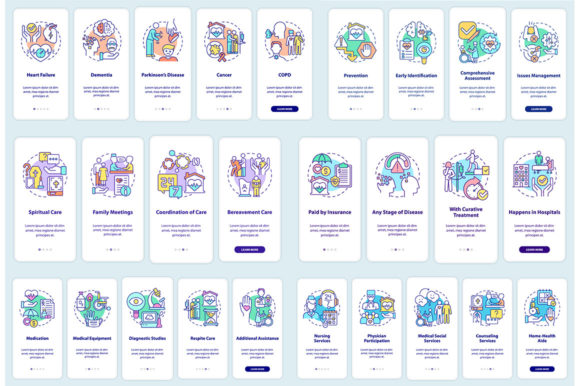
The graphical user interface (GUI) template for these apps must be intuitive and user-friendly. This includes clear navigation, logical layout, and accessible design elements. The use of EPS, SVG, PNG, JPEG, and AI file formats ensures that the app's visual components are high-quality and scalable across different devices.
Walkthrough Steps and Graphic Instructions
To assist users in understanding how to use the app effectively, detailed walkthrough steps and graphic instructions are provided. These linear concepts guide users through the setup process, symptom tracking, and other key functionalities, ensuring a smooth and efficient experience.
Enhancing Patient Care
One of the primary benefits of hospice and palliative care mobile apps is the ability to enhance patient care. By providing real-time symptom tracking and medication management, these apps help healthcare providers deliver more personalized and responsive care, improving the overall quality of life for patients.
Supporting Caregivers and Families
Caregivers and families also benefit significantly from these apps. Features such as secure messaging and access to support resources help them stay connected and informed, reducing stress and providing a sense of community and support.
Integration with Wearable Technology
As technology advances, there is growing interest in integrating hospice and palliative care mobile apps with wearable devices. This integration can provide even more detailed and continuous monitoring of patients' health, enabling more proactive and effective care.
Data Analytics and Personalization
The use of data analytics in these apps can lead to more personalized care plans. By analyzing patient data, the apps can offer tailored recommendations and interventions, further enhancing the effectiveness of hospice and palliative care.
Conclusion
Hospice and palliative care mobile apps are transforming the landscape of end-of-life care by providing essential tools and resources to patients, caregivers, and healthcare professionals. With a focus on intuitive design, robust features, and ongoing technological advancements, these apps are poised to make a significant impact on the quality of care and support available to those in need.
For more information and to stay updated on new topics and discounts, subscribe to BSD Studio. We create icons, brochure infographic templates, mobile app screen pages, and more, offering a comprehensive suite of tools to support your needs.