Understanding and Utilizing Data Graphic Charts
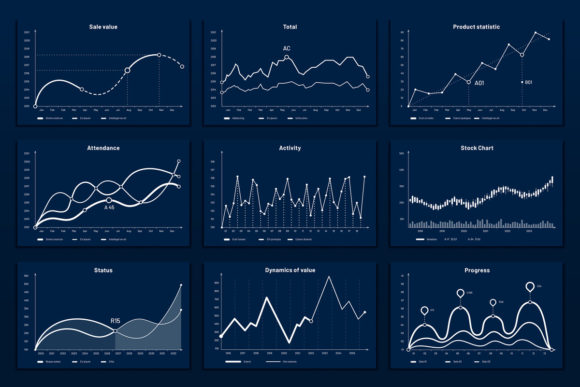
Data graphic charts are powerful tools that help us visualize and understand complex data. These charts, including maths coordinates graphs, growth chart graphics, and business infographic graphs, transform raw numbers into meaningful insights. Whether you're a beginner or a seasoned professional, these visual aids can make your data more accessible and impactful.
The Main Purpose of Data Graphic Charts
The primary goal of data graphic charts is to present information in a clear, concise, and visually appealing manner. They help identify trends, patterns, and outliers, making it easier to draw conclusions and make informed decisions. For instance, a growth chart graphic can show how a company's sales have increased over the years, while a business infographic graph can highlight key performance indicators (KPIs) at a glance.
Characteristics and Value of Data Graphic Charts
Data graphic charts come in various forms, each with its unique characteristics. Common types include bar charts, line graphs, pie charts, and scatter plots. These charts are designed to be intuitive, allowing even those without a background in statistics to grasp the data quickly. The value lies in their ability to simplify complex information, making it easier to communicate findings to stakeholders, clients, or the general public.
Why Use Data Graphic Charts?
There are several compelling reasons to use data graphic charts:
- Clarity and Simplicity: They make data easy to understand, even for non-technical audiences.
- Engagement: Visuals are more engaging than raw data, helping to capture and retain attention.
- Insight Discovery: Patterns and trends become more apparent, leading to better decision-making.
- Professionalism: Well-designed charts enhance the credibility and professionalism of reports and presentations.
Practical Applications of Data Graphic Charts
Data graphic charts are incredibly versatile and can be used in various contexts:
In Business and Marketing
Businesses use data graphic charts to track and present financial performance, market trends, and customer behavior. For example, a bar chart can compare the sales figures of different products, while a line graph can show the trend of website traffic over time.
In Education
Educators and students can benefit from data graphic charts to illustrate concepts, analyze survey results, and present research findings. A pie chart, for instance, can effectively show the distribution of student grades, while a scatter plot can help in understanding the relationship between two variables.
In Personal and Creative Projects
For personal projects, such as tracking fitness goals or budgeting, data graphic charts can provide a clear overview of progress. Creatives can also use these charts to present data in a visually appealing way, enhancing the impact of their work.
Important Considerations Before Using Data Graphic Charts
While data graphic charts are incredibly useful, there are a few things to keep in mind:
- Choose the Right Chart Type: Different charts are suited for different types of data. For example, use a line graph for continuous data and a bar chart for categorical data.
- Keep It Simple: Avoid cluttering the chart with too much information. Focus on the key data points and keep the design clean and uncluttered.
- Use Clear Labels and Legends: Ensure that all axes, data points, and categories are clearly labeled. This helps in avoiding confusion and misinterpretation.
- Consider Your Audience: Tailor the complexity and style of the chart to the knowledge level and interests of your audience.
Conclusion
Data graphic charts are indispensable tools for anyone looking to present and analyze data effectively. Whether you're a business owner, educator, or hobbyist, these charts can help you make sense of complex information and communicate it in a compelling way. By choosing the right type of chart and following best practices, you can create visuals that are both informative and engaging.
Product file: One JPEG 72ppi, One EPS10. If you need to separate elements, remove, or edit something, please use a vector editor like Adobe Illustrator.